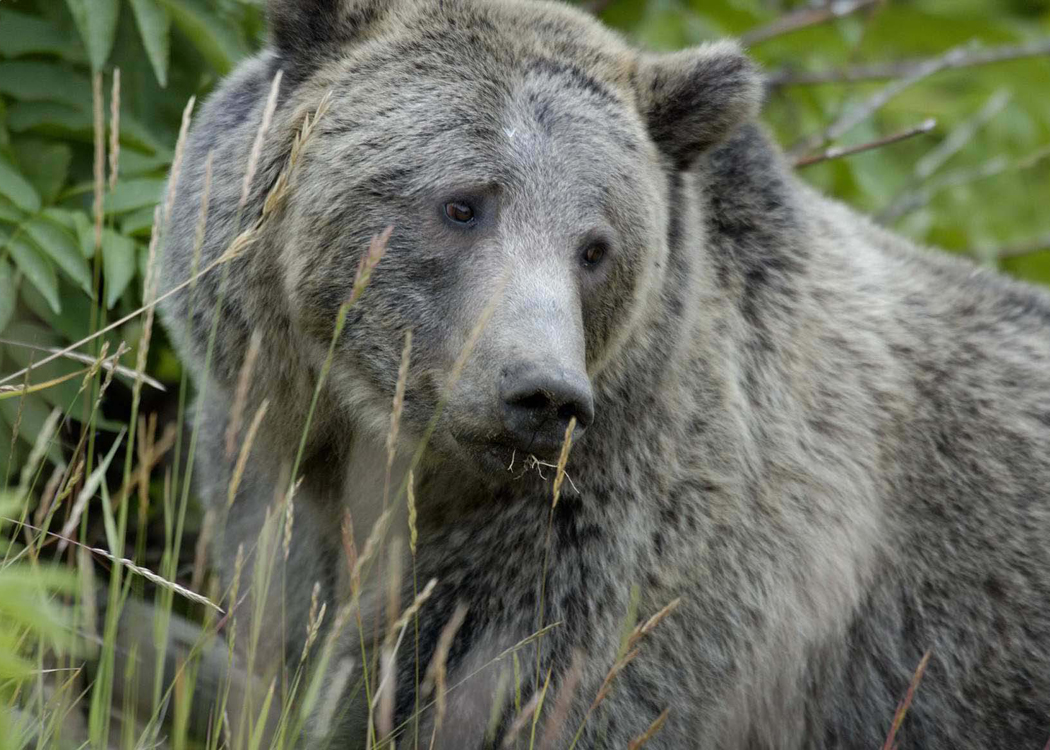
Public domain · Terry Tollefsbol, National Conservation Training Center · source
Quick Facts
- Type
- Mammal
- Size
- 170–280 cm body length
- Weight
- 80–600 kg
- Habitat
- Boreal forest, tundra, mountains, and river valleys
- Diet
- Omnivore — berries, roots, fish, mammals, and carrion
- Active Time
- Diurnal, active during the day
- Lifespan
- 20–30 years in the wild
Field Notes
- Brown bears can detect the scent of food from up to 29 km away, giving them one of the most powerful noses in the animal kingdom.
- During hyperphagia before hibernation, a grizzly bear may consume 20,000 calories per day — roughly equivalent to 40 large steaks.
About the Brown Bear
The brown bear is one of the largest land carnivores on Earth and a keystone species across boreal forests, mountain ranges, and tundra. North American grizzly bears are a subspecies of brown bear. Before winter hibernation, bears enter a phase called hyperphagia in which they consume up to 20,000 calories per day to build fat reserves. Their shoulder hump is solid muscle powering the long claws used to excavate roots, ground squirrels, and spawning salmon. Brown bears can reach speeds of 56 km/h over short distances. Their sense of smell is roughly seven times more powerful than a bloodhound's.
Keep exploring
Related animals
 Red Fox
 Capybara
 Malayan Tapir
 African Bush Elephant
 Bengal Tiger
 Giant Panda
 Sunda Pangolin
 Narwhal
 Giraffe
 Sea Otter
 Red Panda
 European Hedgehog
Or spin for another random animal on the explorer, or browse all species in the full directory.