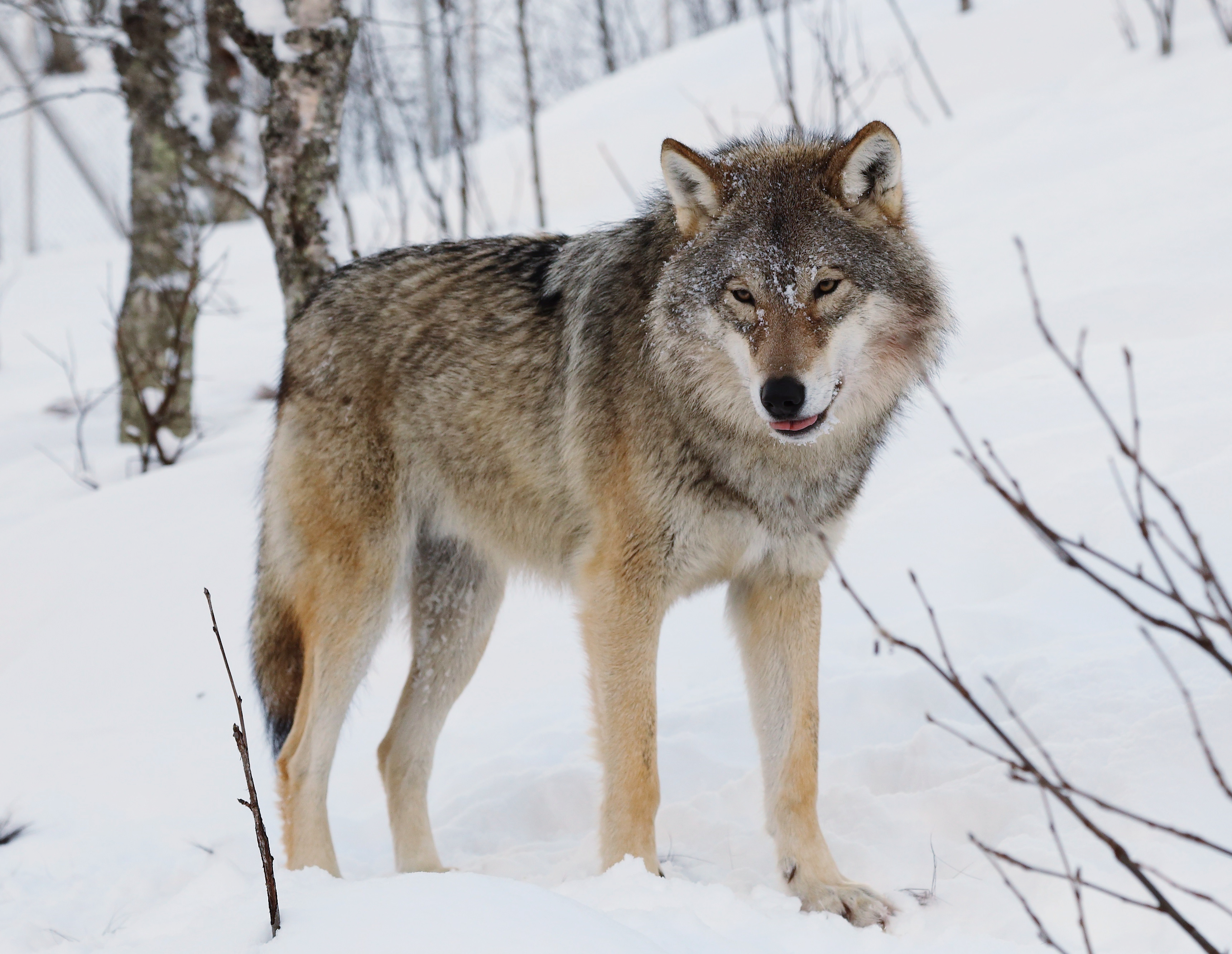
CC BY-SA 4.0 · User:Mas3cf · source
Quick Facts
- Type
- Mammal
- Size
- 100–160 cm body length
- Weight
- 20–80 kg
- Habitat
- Boreal forest, tundra, grassland, and mountains
- Diet
- Carnivore — elk, deer, moose, and smaller mammals
- Active Time
- Crepuscular and nocturnal, most active at dawn and dusk
- Lifespan
- 6–8 years in the wild
Field Notes
- A wolf pack's territory can span 80–2,500 square kilometers, and the group howls together to reinforce boundaries.
- Gray wolves have been clocked running at 56 km/h and can maintain pursuit over many kilometers.
- Wolves communicate with at least 10 distinct vocalizations, plus posture, tail position, and facial expression.
About the Gray Wolf
The gray wolf is the largest wild member of the dog family and an apex predator across the Northern Hemisphere. Wolves live in highly social packs with strict hierarchies, cooperating to bring down prey many times their size, from deer to moose. Their long-distance howls can carry 10 km and serve to coordinate pack members and warn rival groups. Gray wolves were nearly extirpated from the contiguous United States but have rebounded in the Rockies and Great Lakes following reintroduction efforts.
Keep exploring
Related animals
 Red Fox
 Capybara
 Malayan Tapir
 African Bush Elephant
 Bengal Tiger
 Giant Panda
 Sunda Pangolin
 Narwhal
 Giraffe
 Sea Otter
 Red Panda
 European Hedgehog
Or spin for another random animal on the explorer, or browse all species in the full directory.