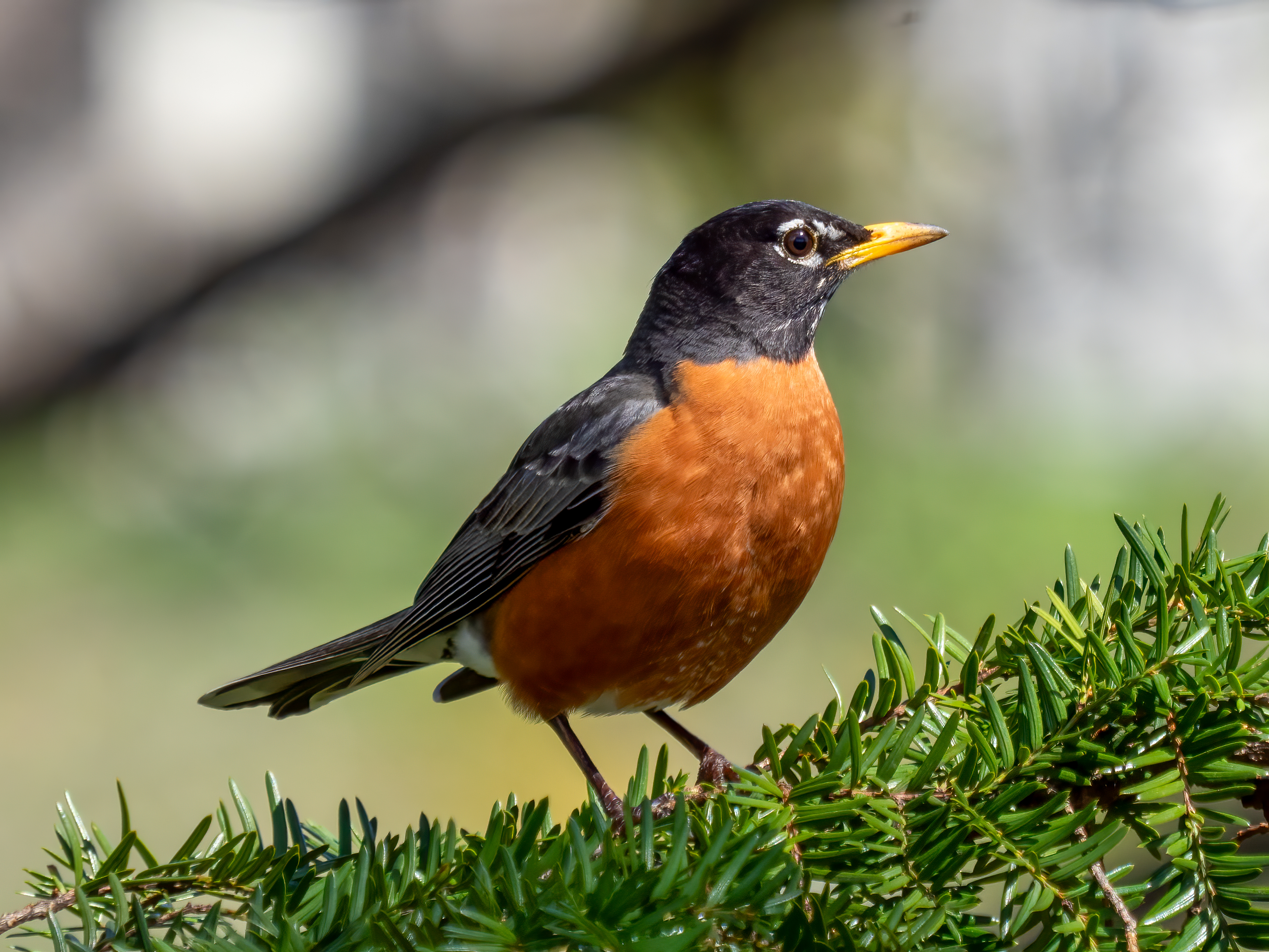
CC BY-SA 4.0 · Rhododendrites · source
Quick Facts
- Type
- Bird
- Size
- 20–28 cm body length
- Weight
- 72–94 g
- Habitat
- Woodlands, suburban gardens, and parkland across North America
- Diet
- Omnivore — worms, snails, insects, berries, and wild fruits
- Active Time
- Diurnal, beginning to call before dawn
- Lifespan
- 2 years in the wild, up to 14 years
Field Notes
- Robins detect earthworms primarily by sight, not sound — they tilt their head to focus one eye on the ground rather than listening.
- They sometimes become intoxicated from eating fermented berries in late winter and fall off their perches.
- American robins are among the earliest birds to begin singing before dawn, sometimes starting an hour before sunrise.
About the American Robin
The American robin is one of North America's most familiar songbirds, widely regarded as a harbinger of spring. Despite its name it is not closely related to the European robin — it is actually the largest North American thrush. Robins hunt earthworms by sight, tilting their head to focus one eye on the soil surface, then pulling the worm out with their bill. They are highly successful urban adapters, breeding from Alaska to southern Mexico and raising two to three broods per year. Their cheerful 'cheerily, cheer-up, cheer-io' song is among the first heard at dawn.
Keep exploring
Related animals
 Peregrine Falcon
 Mandarin Duck
 Eurasian Eagle-Owl
 Indian Peafowl
 Atlantic Puffin
 Vervain Hummingbird
 Bald Eagle
 American Flamingo
 Emperor Penguin
 Snowy Owl
 Toco Toucan
 Chestnut-bellied Guan
Or spin for another random animal on the explorer, or browse all species in the full directory.